
Algae Control: How We Heal Sick Water — The Science of Clear Ponds
Algae isn't the enemy — it's a symptom. Here's the Redfield Ratio, eutrophication, and the biological engineering we use to heal sick water across Temecula, Murrieta, and Palm Springs. How We Heal Sick Water.
- Algae is a symptom of nutrient imbalance, not the disease itself — chemicals only treat the symptom.
- The Redfield Ratio (N:P ≈ 16:1) governs algae behavior; when phosphorus rises relative to nitrogen, algae bloom.
- Eutrophication unfolds in three stages: nutrient loading → algal bloom → oxygen crash that can kill fish overnight.
- Sub-gravel wetland bogs host beneficial bacteria that strip nitrogen and phosphorus, starving algae at the source.
- Mechanical skimmers and bottom aeration keep dissolved oxygen high and organic debris from adding to the nutrient load.
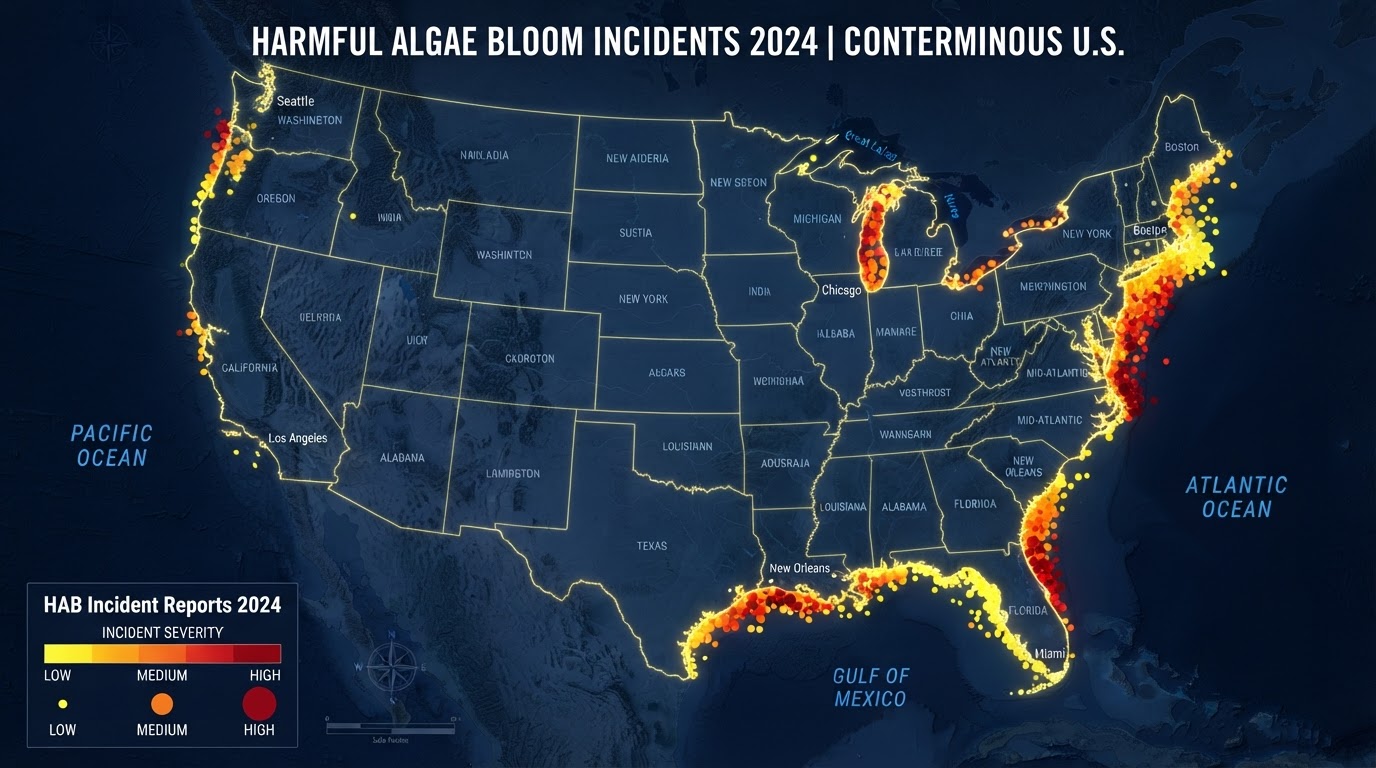
- Harmful Algae Blooms are a documented nationwide problem — biological pond health protects water downstream too.
Green water. Pea soup. String algae choking the rocks. If you own a pond in Southern California, you have probably fought this battle. The instinct of most homeowners — and, frankly, most ordinary landscapers — is to reach for a bottle of algaecide. That is treating the symptom while ignoring the disease. At Columbia Water Gardens, we approach algae the way a doctor approaches a fever: we find the underlying imbalance and heal it. This is the story of how we heal sick water.
To understand algae control, you first have to understand what algae actually is. Algae are microscopic (and sometimes not-so-microscopic) aquatic organisms that need only three things to explode: sunlight, water, and nutrients — specifically nitrogen and phosphorus. When those nutrients are abundant and the water is still, algae multiply explosively. When nutrients are scarce and the water is moving, oxygenated, and biologically filtered, algae never gain a foothold. The pond stays crystal clear. The battle is never won with chemicals; it is won with biology.
In 1934, the oceanographer Alfred Redfield made a discovery that reshaped aquatic science. Sampling plankton across the world's oceans, he found that healthy marine life maintains a remarkably consistent atomic ratio of carbon, nitrogen, and phosphorus — roughly 106:16:1. The nitrogen-to-phosphorus portion of that ratio, about 16:1, became known as the Redfield Ratio, and it turns out to govern algae behavior in your backyard pond just as surely as it governs the Pacific Ocean. When the N:P ratio in your water drifts well below 16:1 — meaning phosphorus is abundant relative to nitrogen — algae seize the advantage and bloom. When the ratio stays near the Redfield ideal, beneficial bacteria and higher plants outcompete algae, and the water stays clear.
The Redfield Ratio: N:P ≈ 16:1
Discovered by oceanographer Alfred Redfield in 1934, this is the nitrogen-to-phosphorus ratio healthy aquatic life maintains. Drag the slider to see how the balance shifts.
So where does the excess phosphorus come from? In a backyard pond, almost everywhere: fish waste and overfeeding, decomposing leaves and grass clippings, fertilizer runoff from the lawn, even the tap water you use to top off the pond. Every source adds phosphorus faster than an undersized filter can remove it. The result is a slow, invisible drift away from the Redfield ratio — and then, seemingly overnight, the water turns green. This is why simply killing the algae with chemicals never lasts: the nutrients are still there, and the moment the chemical wears off, the algae return.
The process that follows is called eutrophication, and it is the single most destructive force in pond health. It unfolds in three stages. First, nutrient loading: nitrogen and phosphorus accumulate faster than the ecosystem can process them. Second, the algal bloom: algae exploit the nutrient surplus, multiplying explosively and clouding the water green. Third — and this is the part that kills fish — the oxygen crash. When that massive algae bloom inevitably dies and sinks, bacteria decompose it, and those bacteria consume enormous quantities of dissolved oxygen. A pond that looked green in the afternoon can be oxygen-depleted by dawn. Fish gasp at the surface. In severe cases, an entire koi collection can be lost in a single night. This is the real danger of algae, and it is why we treat it as a water-chemistry problem, not a cosmetic one.
Eutrophication: How a Pond Goes Sick
The three stages of nutrient-driven pond collapse — the most destructive force in pond health. Click each stage to see it unfold.
Nutrient Loading
Nitrogen & phosphorus from fish waste, leaves, fertilizer runoff, and overfeeding accumulate faster than the ecosystem can process them.
The good news is that eutrophication is entirely reversible, and the fix is biological, not chemical. The core of our approach is the sub-gravel wetland bog — a dedicated biological filter zone filled with graded expanded shale and volcanic bio-gravel that hosts billions of beneficial nitrifying and denitrifying bacteria. As water is drawn slowly down through this living matrix, those bacteria consume nitrogen and phosphorus, stripping the very nutrients algae need to survive. We pair the bog with mechanical surface skimmers that remove leaves and organic debris before they can decompose and add to the nutrient load, and with high-efficiency bottom aeration that keeps dissolved oxygen high so the bacterial colonies — and your fish — thrive.
Balanced Pond vs. Imbalanced Pond
Toggle between a healthy, biologically filtered ecosystem and a nutrient-overloaded, eutrophic pond. The difference is biology — not chemicals.
- N:P ratio near 16:1 (Redfield ideal)
- Wetland bog strips nutrients
- High dissolved oxygen — fish thrive
Maintain the wetland bog, run aeration 24/7, and skim debris before it sinks. The biology holds the balance.
For larger estate ponds and lakes, we add Atlantic-Oase aeration systems and, where needed, floating fountains that turn over the entire water column. The principle is the same: keep the water moving, keep oxygen high, and let biology outcompete algae. You can explore our full lake aeration service to see how this scales to acreage-sized bodies of water. The result is a pond that stays clear because it is healthy — not because it is constantly dosed with chemicals.
This is also why our Natural Swimming Ponds stay crystal clear without a drop of chlorine: their entire design is built around the Redfield ratio. A dedicated regeneration zone of aquatic plants and bio-gravel continuously strips nutrients, holding the N:P balance near the ideal 16:1 and starving algae at the source. The same biology that heals a sick pond keeps a swimming pond pristine.
If your pond is already green, the path back to clear water is a biological reset, not a chemical bandage. Our seasonal cleanout and maintenance service removes the accumulated organic sludge, rebuilds the bacterial colonies, and rebalances the nutrient load. For a koi pond specifically, our koi pond construction and maintenance standards are engineered from the ground up to prevent the nutrient imbalance that causes algae in the first place — deep thermal chambers, oversized wetland filtration, and predator-proof design that keeps the ecosystem stable through Southern California's extreme heat.
The national map tells the larger story. Harmful Algae Blooms are not just a backyard nuisance — they are a documented nationwide problem, with incident reports clustering around the Great Lakes, the Gulf Coast, the Pacific Northwest, and California's own waterways. The same nutrient pollution that turns a backyard pond green is, at scale, what triggers toxic blooms in lakes and reservoirs. Every pond we heal biologically is one less body of water contributing to that problem. Clear water at home is clear water downstream.
Harmful Algae Blooms Across America
The same nutrient pollution that turns a backyard pond green triggers toxic blooms in lakes and reservoirs nationwide. Every pond we heal biologically is one less body of water contributing to the problem.

Clear water at home is clear water downstream. Biological pond health — not chemical dosing — is how we reverse this trend one feature at a time.
Algae is not your enemy. It is your pond's warning light — a signal that the nutrient ratio has drifted and the biology has fallen behind. The answer is never more chemicals. The answer is restoring the balance that nature already knows how to maintain. That is how we heal sick water, and it is the promise behind every feature we build. How We Heal Sick Water.
Ready to explore this on your California property?
We provide comprehensive on-site topographical analysis and 3D hydraulic design consultations across Temecula, De Luz, La Cresta, and Palm Springs.
Book On-Site Design ConsultationArticle Q&A: Algae Control
Focused answers addressing the specific mechanics explored in this article.
The Redfield Ratio is the roughly 16:1 atomic ratio of nitrogen to phosphorus that healthy aquatic life maintains. When your pond's N:P ratio drifts below that — meaning phosphorus becomes abundant relative to nitrogen — algae outcompete beneficial organisms and bloom. Restoring the ratio through biological filtration is how we clear green water permanently.
Algae Control Knowledge Check
Test what you just learned about the Redfield Ratio, eutrophication, and biological algae control — 8 questions, scored instantly with full explanations.
What is algae really a symptom of?
What is the Redfield Ratio?
Who discovered the Redfield Ratio and when?
What are the three stages of eutrophication, in order?
Why does the oxygen crash happen AFTER the algae bloom?
How does a sub-gravel wetland bog prevent algae?
Why do algaecides fail to control algae long-term?
True or false: Harmful Algae Blooms are only a backyard problem.
Is Your Pond Sick? Get a Free Algae Diagnosis
Tell us what you're seeing and upload photos. Our master pond specialists will review your situation and reach out with a biological healing plan — no chemicals, just nature.
Get Your Free Algae Diagnosis
Tell us what your pond looks like and upload a photo. We'll identify the nutrient imbalance and prescribe a biological fix — no chemicals, no guesswork.