
How Much Does It Cost to Build a Pond in Southern California? The Honest 2026 Price Guide
Before anyone buys a single boulder, they want sticker-shock therapy. Here's the honest 2026 breakdown of koi pond, pondless waterfall, and natural swimming pond costs across Beaumont, Temecula, Palm Springs, and the Inland Empire — installation vs. DIY, ongoing expenses, and resale reality.
- Turnkey master-built koi ponds run $35,000–$150,000+; pondless waterfalls $18,000–$85,000+; natural swimming ponds $95,000–$350,000+ across the Beaumont 42-mile radius in 2026.
- Five variables drive almost all cost: water volume, depth, filtration grade, stonework, and site access — model them live in the interactive estimator below.
- DIY pond builds almost always cost more after factoring in liner failures, undersized filtration, and the eventual professional rebuild — use the free calculators first if you insist on being hands-on.
- Ongoing operating cost is low: a properly sized pump runs ~$30–$60/month in electricity, plus modest seasonal bacteria and an annual cleanout — far cheaper than a chemical pool.
- A master-built water feature adds resale value (50–100%+ return on luxury homes); a DIY or neglected pond subtracts it — build quality is the deciding factor.
- Removing a pond ($1,500–$20,000+) is almost always the wrong economic choice vs. renovating it — our renovation service restores the asset for less than demolition costs.
- Hire a Certified Master Pond Builder with a CSLB license (#986707) and authorized equipment-partner status (Atlantic-Oase) — and ask how they calculate pump turnover against water volume.
- The $500 on-site consultation is the path to a fixed, written quote; 50% is credited toward your build, and the Skill-Fit Assurance means you owe nothing if the project is outside our scope.
It is the first question every homeowner asks, usually before they have even decided what kind of water feature they want: "How much is this hole in my yard going to cost me?" It is a fair question, and in Southern California — where a single boulder can run hundreds of dollars and a mini-excavator rental eats a weekend — the answer is more nuanced than a number on a website. This guide gives you the honest 2026 pricing we deliver to homeowners across Beaumont, Cherry Valley, Yucaipa, the San Jacinto Valley, Redlands, the Coachella Valley, and every community within our 42-mile service radius. No teaser ranges that double by the end. No "call for pricing" runaround. Real numbers, real variables, and a clear path to a fixed quote.
Let's start with the headline ranges, because that is what you came for. A turnkey, master-built living koi pond from Columbia Water Gardens typically runs $35,000 to $150,000+. A pondless waterfall or cascading mountain stream runs $18,000 to $85,000+. A custom decorative fountain or basalt pillar array runs $8,500 to $40,000. A 100% chemical-free Natural Swimming Pond — a true biological swimming pool — runs $95,000 to $350,000+. These are all-in, turnkey installed numbers: design, excavation, 45-mil EPDM liner, skimmer, biological filtration, pump, native granite, plumbing, electrical, startup, and water balancing. You can see every discipline side by side, with an interactive Estimate Builder that lets you model your own configuration, on our full pricing page.
Why such wide ranges? Because a water feature is not a commodity — it is a custom, site-built piece of living engineering, and five variables drive almost all of the cost. The first is size and water volume: an 11'×16' ecosystem pond (~1,600 gallons) sits near the middle of the koi range, while a 26'×32' showcase pond (~8,500 gallons) pushes toward the top. The second is depth: every additional foot of depth — from a standard 30 inches down to a 5-foot predator-proof thermal chamber — adds to the excavation, liner, and stone budget. The third is filtration grade: a Signature skimmer-and-biofilter system is reliable, but our Pro Series wetland filter and Elite wetland-plus-UV clarification are what deliver gin-clear water with the least ongoing upkeep. The fourth is stonework: a classic regional boulder mix is included, but weathered moss rock (20-ton minimum) and black slate character stone are premium upgrades. The fifth is site access: a backyard a mini-excavator can reach is one thing; a slope that requires a crane or a 40-yard boulder placement is another. Our interactive Pond Cost Estimator below lets you drag these variables and watch the range move in real time.
Model Your Real 2026 Investment
Drag the variables that drive cost — feature type, size, filtration, stonework, depth, and site access — and watch your honest installed range update in real time. This is the same logic behind our full pricing page.
Your estimated investment
$19,400
Educational estimate for typical Southern California site conditions. Final pricing is confirmed only after an on-site consultation and is binding only when delivered in writing on your final installation agreement.
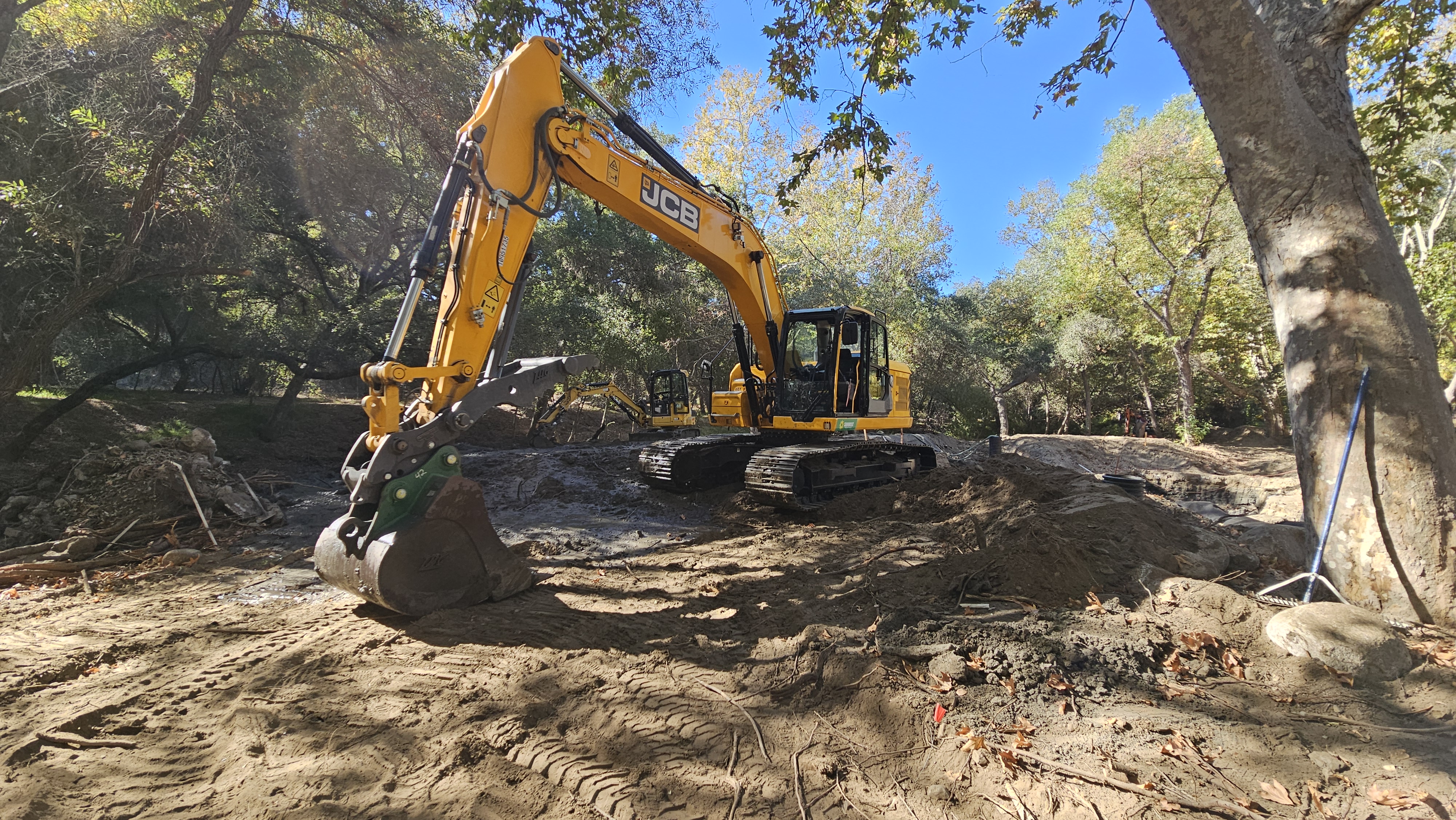
Now the question every DIY-minded homeowner asks: can I just rent a mini-excavator for a weekend and build it myself? You can — and many brave homeowners do — but the honest answer is that DIY pond builds almost always cost more, not less, once you account for the things that go wrong. A 45-mil EPDM liner is unforgiving: one hidden root or sharp stone and you have a slow leak that drains the pond and stresses the fish. Undersized filtration turns green within a month, because the biological load was never calculated against the actual water volume. A pump that is too small leaves dead zones where stagnation and algae take hold. And the stonework — the single thing that separates a pond that looks like it grew out of the landscape from one that looks like a pile of rocks — is a craft that takes years to master. We routinely renovate DIY ponds that cost their owners $8,000–$15,000 in materials and a lost summer, only to need a $20,000+ professional rebuild. If you want to understand exactly what goes wrong with older and DIY builds, our pond renovations and remodels page walks through every common failure and how we fix it.
The smart middle path, if you are determined to be hands-on, is to use our free pond and waterfall calculators first. Our sizing, filtration, fish-load, and hydraulics calculators let you calculate the correct water volume, pump turnover rate, and biological filter capacity before you dig a single hole. Run the numbers, understand the biology, and you will at least avoid the most expensive DIY mistakes. Then, when you are ready for a feature that actually performs — clear water, healthy fish, and a waterfall that looks like it belongs on the mountain — book an on-site consultation and let us engineer it properly.
Now let's talk about the ongoing expenses, because a pond is not a one-time purchase — it is a living system with a monthly operating cost. The good news is that a master-built biological pond is remarkably inexpensive to run. The single largest ongoing cost is electricity for the pump, and here the math surprises most homeowners. A modern, high-efficiency submersible or external pump on a properly sized system draws roughly 100–400 watts continuous. At Southern California's average residential rate of roughly $0.32 per kilowatt-hour, a 200-watt pump running 24/7 costs about $46 per month — less than most people spend on a single dinner out. A pondless waterfall, which can be switched off entirely when you travel, costs even less. You can run the exact numbers for your feature size on our pond electricity and pump-sizing calculator.
Beyond electricity, the ongoing costs are modest and predictable. Beneficial bacteria is added seasonally — a few dollars a month. The skimmer net is emptied weekly — five minutes of your time, free. And once or twice a year, a seasonal cleanout removes accumulated sludge and rebalances the biology. Our white-glove seasonal maintenance packages handle this end to end, and most estate owners budget $500–$2,000 per year depending on feature size and whether they want weekly, bi-weekly, or annual service. Compare that to a traditional chlorine pool, which routinely runs $150–$300 per month in chemicals alone, plus electricity, plus acid, plus the eventual salt-cell or heater replacement. A living biological pond is, over its lifetime, dramatically cheaper to operate than a chemical pool of comparable size. You can explore the full maintenance program on our pond and waterfall maintenance page.
Then there is the question that sits right next to the cost-to-build searches in Google Trends: do koi ponds add value to a home? The honest, evidence-based answer is yes — but with an important caveat. A well-built, master-crafted water feature is a distinguishing landscape asset that absolutely increases buyer interest and perceived property value, particularly in luxury markets like Temecula Wine Country, La Cresta, De Luz, and the Coachella Valley, where outdoor living is a primary selling point. Appraisers and real-estate agents consistently report that mature, professionally installed hardscape and water features return 50–100%+ of their cost in added value on upper-tier homes. The caveat: a poorly built, leaking, or green-water DIY pond does the opposite — it reads as a liability and a future expense to a buyer. This is why build quality matters so much: the same dollar invested in a master-built feature returns value, while the same dollar invested in a DIY feature can subtract it. If you are preparing a property for sale and the existing pond is a problem, our pond repair and leak detection service can restore it to an asset before listing.
And the final, less glamorous search that sits right next to "do koi ponds add value": how much does it cost to remove a pond? This is the question homeowners ask when they have inherited or bought a property with a neglected, failing water feature. Removal costs vary widely — a small DIY pond might be $1,500–$5,000 to demolish and backfill, while a large concrete or liner pond with extensive rockwork can run $8,000–$20,000+ to fully remove, haul away, and regrade. But here is the secret most contractors won't tell you: removal is almost never the right economic choice. A neglected pond is usually a filtration and biology problem, not a structural one. Our pond renovations and remodels service routinely transforms a green, leaking eyesore into a crystal-clear living feature for less than the cost of demolition — and you keep the asset instead of paying to destroy it. If you have just bought a house with a pond, our inherited koi pond 30-day inspection and reset checklist walks you through exactly what to evaluate before you decide.
So how do you actually hire the right pond builder near you? This is the "who do I hire to build a pond near me" search, and it matters more than any line item on a price sheet. The single most important credential is not a website gallery — it is whether the builder is a Certified Master Pond Builder and an authorized professional contractor for the equipment they install (we are an authorized Atlantic-Oase Professional Contractor). Ask for proof of a California contractor's license (ours is CSLB #986707), ask for the actual biological filtration design — not just "a filter" — and ask how they calculate pump turnover against water volume. A builder who cannot answer those three questions is guessing with your money. Our full credentials, certifications, and the standards we build to are detailed on our homepage, and every consultation begins with a transparent on-site evaluation.
Which brings us to the consultation itself. We charge a flat $500 for a comprehensive on-site design and water feature consultation — and yes, that is a professional fee, not a refundable deposit. But here is why it is the best $500 you will spend: 50% of it ($250) is credited directly toward your construction contract when you move forward, so it becomes part of your build investment. And under our Skill-Fit Assurance, if we arrive and determine your project requires a trade footprint outside our master-level skillset, you owe nothing. The consultation is where we read your site's elevation, drainage, soil, and sightlines, and give you a real, fixed, written number — not a teaser range that doubles later. You can book that consultation directly on our contact page, and you can prepare for it using the pre-consultation checklist there.
The bottom line on cost is this: a master-built living water feature is an investment, but it is a transparent, predictable one when you work with a builder who prices honestly. The ranges in this guide — $35K–$150K+ for a koi pond, $18K–$85K+ for a pondless waterfall, $95K–$350K+ for a natural swimming pond — are the real 2026 numbers across our Beaumont-to-Coachella service territory. The interactive estimator below lets you model your own configuration in real time. And when you are ready for a number that is actually yours, book the on-site consultation. That is how you turn "how much is this hole in my yard going to cost me" into a fixed, written, build-ready answer.
Ready to explore this on your California property?
We provide comprehensive on-site topographical analysis and 3D hydraulic design consultations across Temecula, De Luz, La Cresta, and Palm Springs.
Book On-Site Design ConsultationArticle Q&A: How Much Does It Cost to Build a Pond in Southern California? The Honest 2026 Price Guide
Focused answers addressing the specific mechanics explored in this article.
A turnkey, master-built living koi pond from Columbia Water Gardens typically ranges from $35,000 to $150,000+ depending on size, depth, filtration grade, and stonework. An 11'×16' signature ecosystem pond with Pro Series wetland filtration sits near the middle. Pricing is all-in: design, excavation, 45-mil EPDM liner, skimmer, bio-filtration, pump, native granite, plumbing, electrical, startup, and water balancing — with a fixed-price quote, not hourly billing.
Pond Cost & Hiring Knowledge Check
Test what you just learned about real 2026 pond pricing, DIY vs. professional, ongoing costs, and resale — 8 questions, scored instantly with full explanations.