
The Top 20 Plants for a Koi Pond: A Master Guide to Aquatic, Wetland, Stream & Surrounding Plants
The right plants don't just beautify a koi pond — they're the living engine of the ecosystem. Here are the 20 best plants for your pond, bog, stream, and surrounding beds, with planting zones, growth rates, and ecosystem benefits — plus the invasive species to avoid.
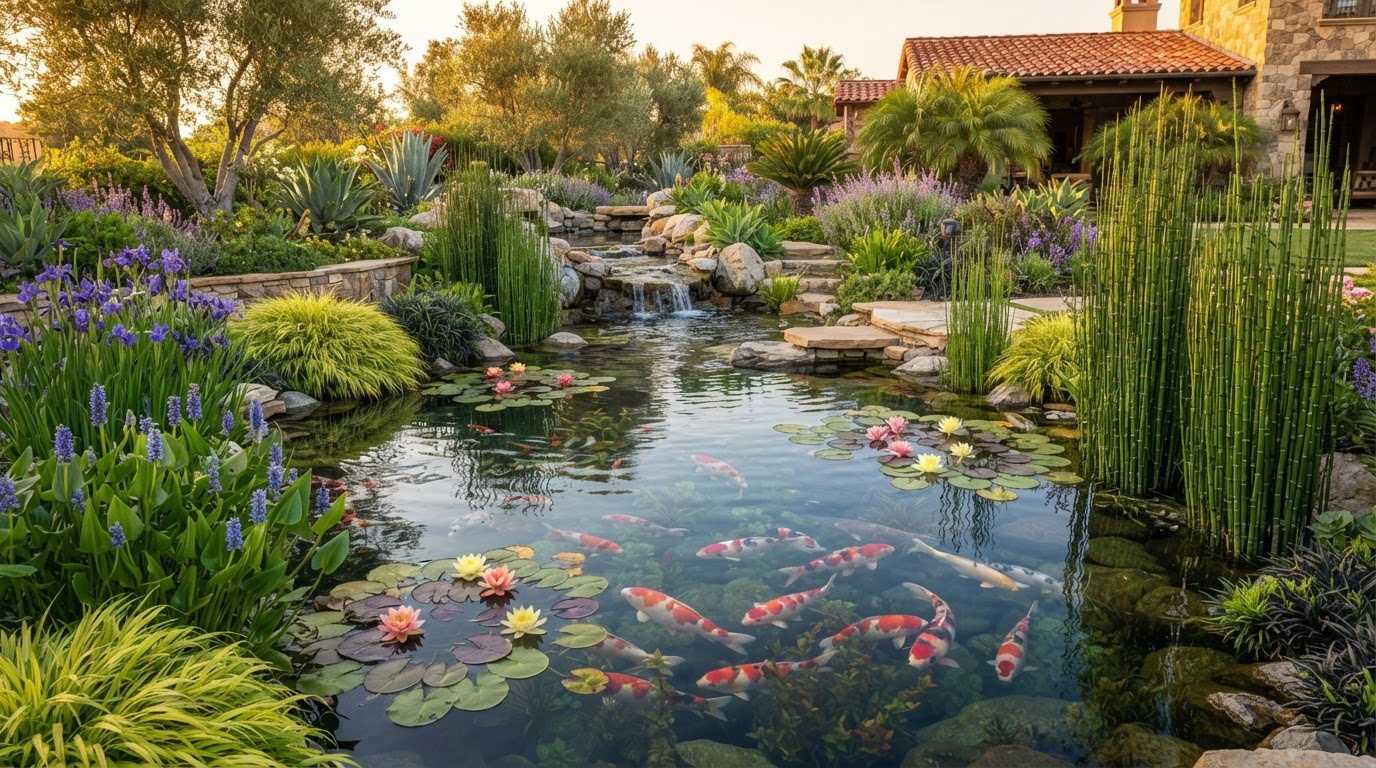
- A koi pond has four distinct planting zones — In Pond, Wetland Bog, Stream Edge, and Planter Bed — each with a specific biological role.
- Floating plants (water lilies, lotus) shade the surface and block sunlight from algae; submerged oxygenators (hornwort, anacharis) strip dissolved nutrients from the water column.
- Wetland bog marginals (iris, pickerel weed, taro) host the beneficial bacteria that maintain the Redfield Ratio and keep water crystal clear.
- Stream-edge plants (horsetail, cattails, creeping jenny) stabilize gravel, trap debris, and create a natural transition from waterfall to pond.
- Surrounding planter-bed plants (Japanese forest grass, mondo grass, dwarf maple) frame the feature without competing for water nutrients.
- Several popular aquatic plants are invasive in California — water hyacinth, water lettuce, parrot feather, and Brazilian elodea are restricted or banned. Always check before planting.
A koi pond without plants is just a tank of water. Plants are the living engine that makes the ecosystem self-sustaining — they shade the water, strip dissolved nutrients, host beneficial bacteria, stabilize gravel, shelter fry, and frame the entire feature in living architecture. The secret to a crystal-clear, low-maintenance koi pond is choosing the right plants for the right zones. At Columbia Water Gardens, we think of every pond as having four distinct planting zones, each with a biological job to do.
The first zone is the open water — the In Pond zone. This is where floating plants like water lilies and lotus shade the surface, blocking sunlight from reaching the depths where algae would otherwise bloom. Beneath them, submerged oxygenators like hornwort and anacharis release oxygen directly into the water column and absorb the dissolved nitrogen and phosphorus that would otherwise feed green water. Together, floating and submerged plants form a two-layer defense: one blocks the light, the other strips the nutrients.
The second zone is the Wetland Bog — the biological heart of the pond. This is the shallow gravel-and-shale regeneration area where marginal plants like blue flag iris, pickerel weed, and taro send their roots deep into the bio-gravel. Those roots host billions of beneficial nitrifying bacteria, the very organisms that convert toxic ammonia from fish waste into harmless nitrates. The bog is where the Redfield Ratio is maintained — where nitrogen and phosphorus are stripped from the water before algae can exploit them. Without a well-planted bog, no pond stays clear for long.
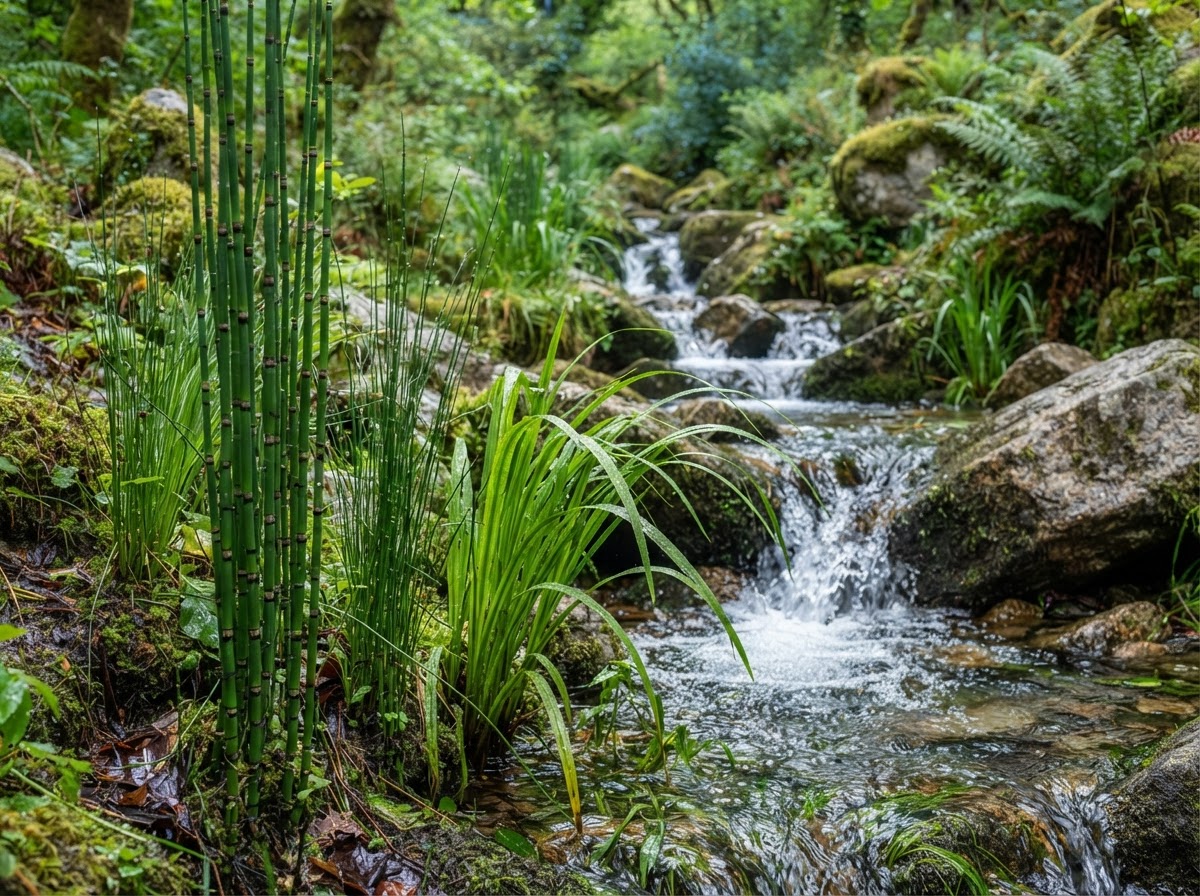
The third zone is the Stream Edge — the transition where water tumbles from a waterfall or meanders through a creek before entering the pond. This is where rushes, reeds, and cascading creepers like creeping jenny stabilize the gravel, trap leaves and organic debris before they wash into the main pond, and soften the hard line between stone and water. A well-planted stream edge is what makes a waterfall look like it was born into the landscape rather than built onto it.
The fourth zone is the surrounding Planter Bed — the landscape that frames the pond. This is where ornamental grasses like Japanese forest grass and mondo grass, and sculptural specimens like dwarf Japanese maple, create the visual context that makes a water feature feel like a designed estate landscape rather than a hole in the ground. These plants don't enter the water, but they're essential to the overall composition — and their root systems help stabilize the surrounding soil and prevent runoff from carrying fertilizer into the pond.
Each plant in our top-20 list is chosen for a specific reason: its biological function, its suitability for Southern California's climate, and its aesthetic contribution to the design. Below, you'll find an interactive guide with photos, planting zones, hardiness ranges, expected growth rates, mature sizes, and the ecosystem benefit each plant provides. Filter by zone to see which plants belong where, and read the full description to understand why we recommend it.
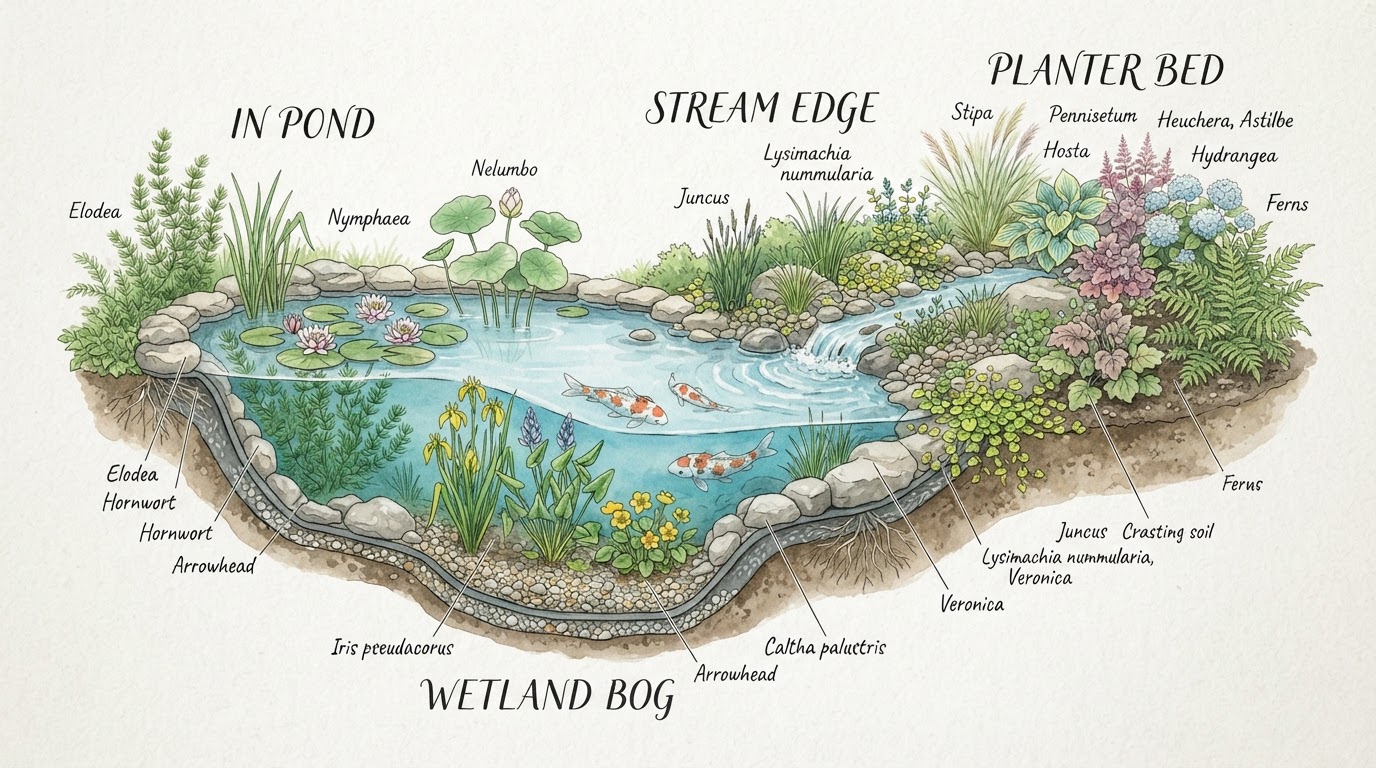
The right plants don't just beautify a koi pond — they're the living engine of the ecosystem. Floating plants shade the water and starve algae. Wetland marginals strip nutrients through their roots. Stream-edge plants stabilize gravel and trap debris. And the surrounding planter bed frames the entire feature in living architecture. Below is our master guide to the 20 plants we use most, organized by where they belong.
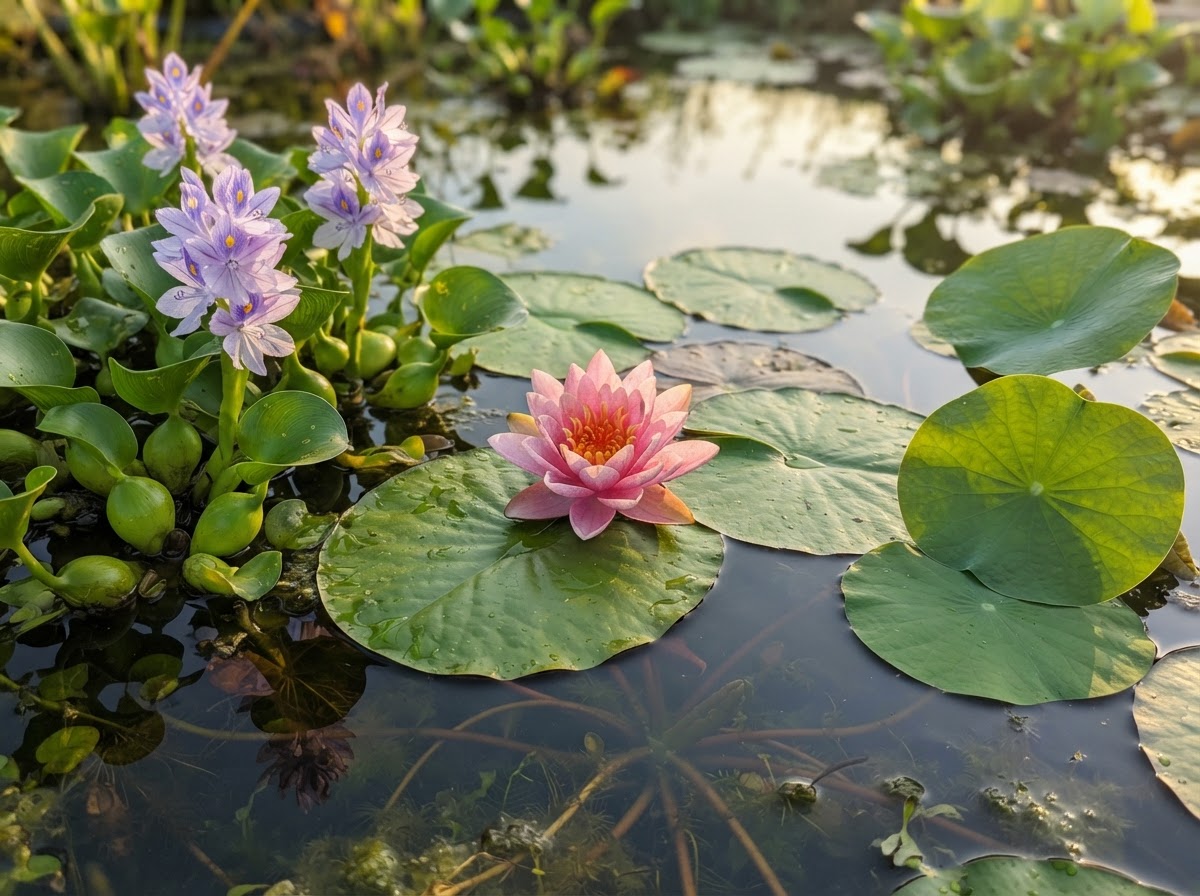
1. Hardy Water Lily
Nymphaea spp.
Shades the water column, blocking sunlight from algae; provides koi with cool summer refuge; flowers attract pollinators.
2. Lotus
Nelumbo nucifera
Massive leaves shade water; aerates through stomata; spectacular blooms draw native pollinators; tubers offer koi natural foraging.
3. Water Hyacinth
Pontederia crassipes
One of nature's most efficient nutrient strippers — pulls nitrogen and phosphorus directly from the water, starving algae. Lavender blooms attract bees.
Check local regulations — water hyacinth is restricted in some California waterways. Never in natural lakes or streams.
4. Water Lettuce
Pistia stratiotes
Velvety rosettes shade the surface and strip excess nutrients; dangling roots provide cover for fry and beneficial insect habitat.
Also restricted in some California waterways — keep it in closed, self-contained ponds only.
5. Hornwort
Ceratophyllum demersum
Releases oxygen directly into the water column; competes with algae by absorbing nitrogen; provides dense cover for koi fry and beneficial insects.
6. Anacharis
Elodea canadensis
Constant underwater oxygen production; absorbs dissolved nutrients that would otherwise feed algae; shelter for spawning koi.
7. Water Lotus (Dwarf)
Nelumbo 'Baby Doll'
Compact surface shading; pollinator-friendly blooms; ideal for smaller koi ponds and container water gardens.
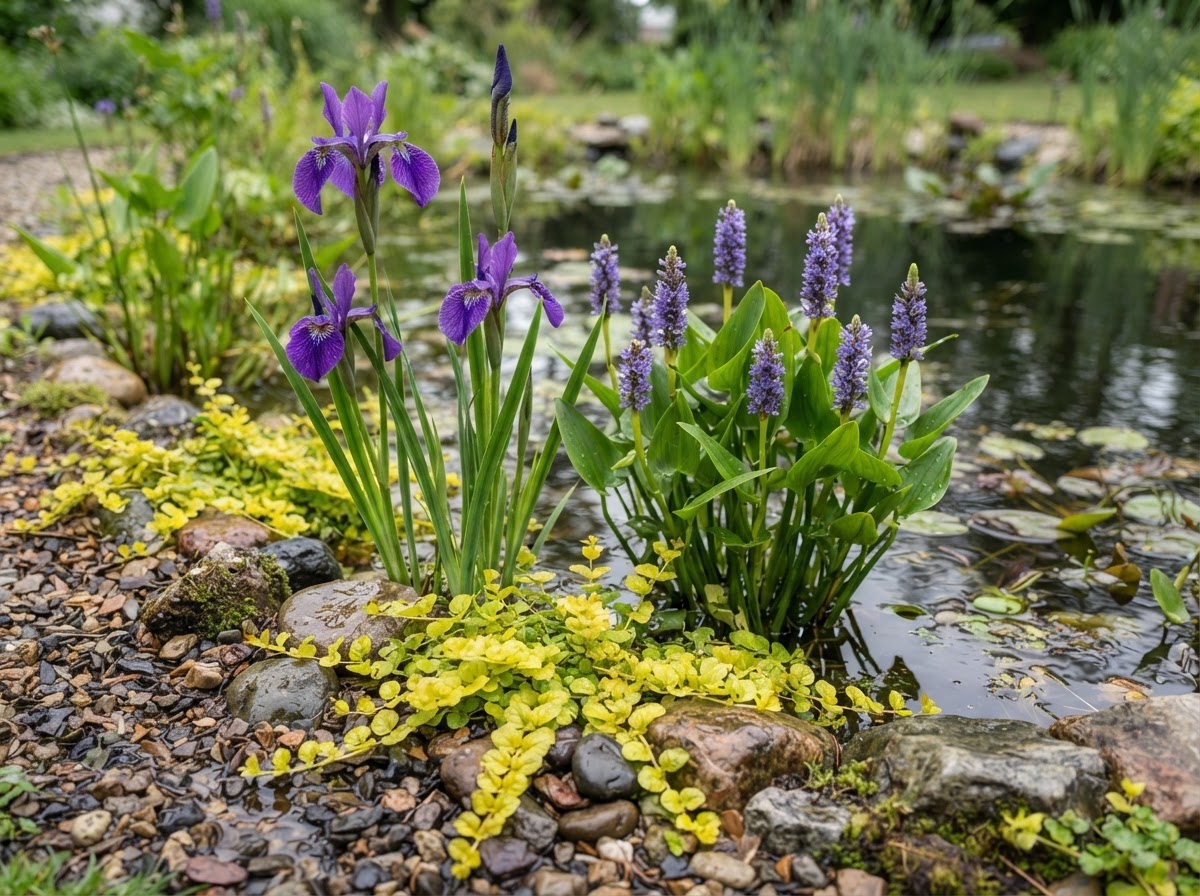
8. Blue Flag Iris
Iris versicolor
Roots host dense colonies of beneficial bacteria in the wetland gravel; stunning violet-blue blooms attract native pollinators; fibrous roots trap suspended sediment.
9. Pickerel Weed
Pontederia cordata
One of the top nutrient-stripping marginals — pulls phosphorus and nitrogen continuously through its root system; purple flower spikes attract dragonflies and bees.
10. Creeping Jenny
Lysimachia nummularia
Soft trailing stems cascade over wetland gravel and stream stones, stabilizing substrate and trapping sediment; golden foliage brightens shaded margins.
11. Marsh Marigold
Caltha palustris
Early-spring nectar for native pollinators emerging before most other bloomers; dense roots oxygenate bog substrate; tolerates seasonal water level fluctuation.
12. Sweet Flag
Acorus calamus
Variegated blades add vertical texture; rhizomes stabilize wetland gravel; releases a subtle, clean fragrance when bruised; tolerates seasonal submersion.
13. Taro (Elephant Ear)
Colocasia esculenta
Enormous leaves shade the bog, cooling water as it passes through; massive root systems strip nutrients; dramatic architectural statement for estate-scale features.
14. Canna Lily
Canna spp.
Bold tropical foliage and showy summer blooms; roots thrive in saturated gravel and strip nutrients; hummingbirds visit the flowers daily.
15. Horsetail Rush
Equisetum hyemale
Hollow, jointed stems add striking vertical architecture along stream edges; roots stabilize gravel against erosion; adds a prehistoric, sculptural quality to waterfall runs.
Can spread aggressively by rhizome — keep contained with root barriers or plant in pots submerged in the bog.
16. Dwarf Cattail
Typha minima
Compact version of the iconic reed; roots filter water; miniature catkins add whimsical texture; provides nesting cover for birds and dragonflies.
17. Creeping Jenny (Stream Edge)
Lysimachia nummularia 'Aurea'
Golden trailing stems cascade over waterfall stones, softening hardscape edges and trapping organic debris before it enters the main pond.
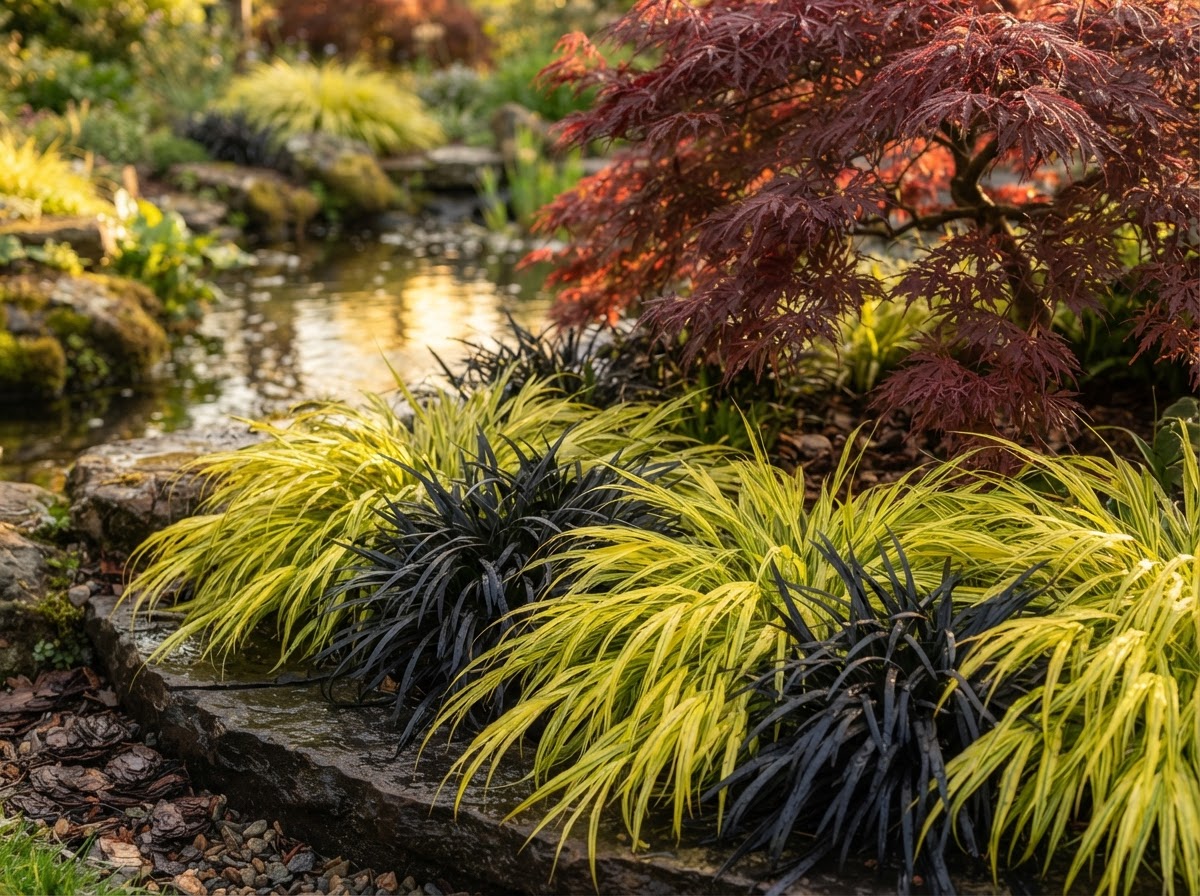
18. Japanese Forest Grass
Hakonechloa macra
Graceful, cascading blades soften hardscape edges; thrives in dappled shade near pond margins; adds motion and texture without competing for water nutrients.
19. Mondo Grass
Ophiopogon japonicus
Evergreen ground cover that frames pond stonework year-round; deep roots stabilize surrounding soil; never invades the water's edge; black-leafed varieties add dramatic contrast.
20. Dwarf Japanese Maple
Acer palmatum dissectum
Dappled canopy shade keeps surrounding planters cool; brilliant autumn color; sculptural winter silhouette; moderate root system won't invade pond liners.
Plants That Will Harm Your Pond & Local Waterways
These species may be sold at nurseries but are banned or restricted in California. They spread aggressively, choke ecosystems, and — in natural waterways — are illegal to plant. Never introduce them to any pond connected to a stream, lake, or river.
Water Hyacinth (in natural waterways)
Pontederia crassipesDoubles in 6–18 days; chokes entire lakes, blocks sunlight, depletes oxygen; listed invasive by CDFA and CIPC. Safe ONLY in closed, self-contained koi ponds — never in lakes, streams, or rivers.
Water Lettuce (in natural waterways)
Pistia stratiotesForms dense mats that block oxygen exchange and outcompete native aquatic plants; can completely smother still water. Permitted in closed garden ponds only.
Parrot Feather
Myriophyllum aquaticumExtremely aggressive spreader; tangles and clogs pumps, skimmers, and pipes; listed as a noxious weed by the USDA and CDFA. Never use under any circumstances — not even in closed ponds.
Giant Reed / Arundo
Arundo donaxGrows 30+ feet tall, crowds out every native riparian plant, drastically increases fire risk, and reshapes entire river corridors. One of California's worst invasive plants.
Brazilian Waterweed / Brazilian Elodea
Egeria densaDense submerged mats block all light, killing native aquatic life; listed as a California noxious weed. It fragments and regenerates from tiny pieces, making it nearly impossible to remove once established.
Yellow Flag Iris
Iris pseudacorusAggressive in wetlands and stream edges; forms dense monocultures that exclude native vegetation; seeds spread via water. Use the native blue flag iris (Iris versicolor) instead.
Pampas Grass
Cortaderia selloanaEach plant produces millions of wind-blown seeds; aggressively colonizes disturbed areas and hillsides; listed invasive by Cal-IPC. Unsuitable near any water feature.
Periwinkle / Vinca
Vinca majorTrailing evergreen that smothers ground-level natives and spreads aggressively in moist, shaded planter beds — exactly the conditions around a koi pond. Choose mondo grass instead.
One critical note: not every plant sold at a nursery belongs near a pond. Several popular aquatic and ornamental plants are invasive in California — they spread aggressively, choke native ecosystems, and in natural waterways are illegal to plant. Water hyacinth and water lettuce, for example, are extraordinary nutrient-strippers in a closed, self-contained koi pond, but they're restricted in natural lakes and streams because they double in size every two weeks and can smother an entire waterway. Parrot feather and Brazilian elodea are federally listed noxious weeds — never use them under any circumstances. Our invasive-species list at the bottom of this guide names the plants to avoid and explains exactly why.
The right plant palette transforms a koi pond from a maintenance burden into a self-regulating ecosystem. When floating plants shade the surface, bog plants strip the nutrients, stream plants stabilize the margins, and the surrounding beds frame the composition, the pond largely takes care of itself. That's the difference between a pond that's constantly green and a pond that's constantly clear — and it's the standard we build to on every Columbia Water Gardens installation across Temecula, Murrieta, Palm Springs, and the Inland Empire.
Ready to explore this on your California property?
We provide comprehensive on-site topographical analysis and 3D hydraulic design consultations across Temecula, De Luz, La Cresta, and Palm Springs.
Book On-Site Design ConsultationArticle Q&A: The Top 20 Plants for a Koi Pond
Focused answers addressing the specific mechanics explored in this article.
The In Pond zone (floating and submerged plants that shade water and strip nutrients), the Wetland Bog zone (marginal plants whose roots host beneficial bacteria), the Stream Edge zone (rushes and reeds that stabilize gravel and trap debris), and the surrounding Planter Bed zone (ornamental grasses and perennials that frame the feature). Each zone has a distinct biological job.
Koi Pond Plant Guide Knowledge Check
Test what you just learned about the four planting zones, ecosystem benefits, and invasive species — 8 questions, scored instantly with full explanations.